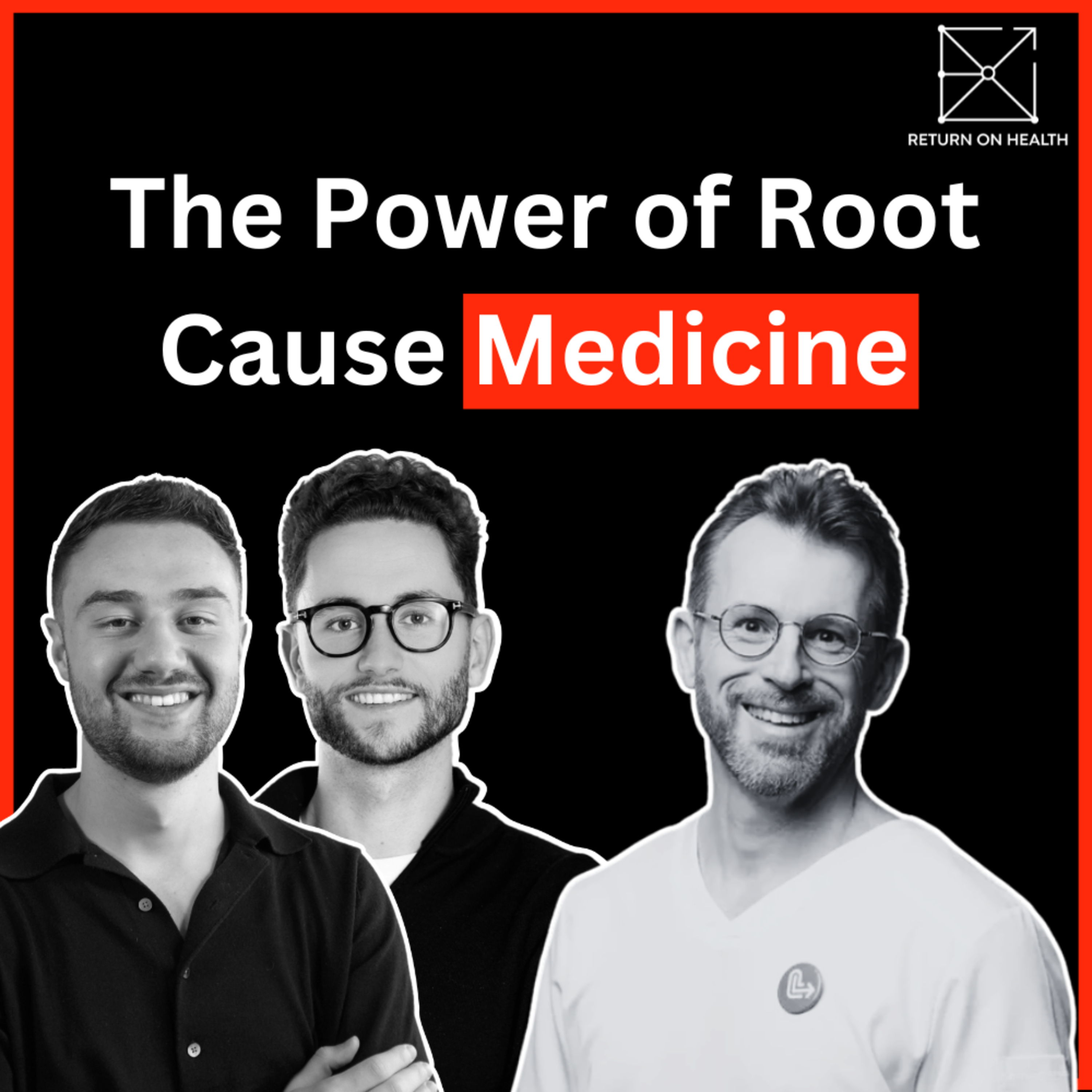
Functional Medicine and Root-Cause Care — Dr. Peter Martin on 5,000+ Patients
Dr. Peter Martin spent roughly fifteen years in CNS pharmacology research before his own burnout pushed him to look beyond a model built around symptom control. What began as a personal search for recovery became FunMed — a data-driven clinic built around root-cause medicine, and the more than five thousand patients who have passed through it since.
Chapters jump into the video
From pharmacology to root-cause medicine
Martin's route into functional medicine ran through drug research and his own burnout. That combination left him skeptical of a system that is very good at suppressing symptoms and much weaker at asking why they appear. Root-cause medicine, as he practises it, is the attempt to work upstream — to find and address the drivers of chronic disease rather than manage its outputs.
What 5,000+ patients taught him
The clinic's value, in Martin's telling, is the real-world dataset it has built from thousands of patients. Chronic disease rarely fits the acute-care template of one problem and one drug; it tends to be multi-factorial and slow-building. Seeing that pattern at scale is what convinced him a different care model is needed for it.
Big biomarker panels — and their limits
FunMed tests around two hundred biomarkers, but Martin is refreshingly honest about the trade-off: the more you measure, the more false positives you generate. Large panels can create anxiety and send clinicians chasing noise. The skill is not ordering every possible test but interpreting the ones that matter in context.
Fasting insulin: the overlooked marker
If he had to elevate one under-used measurement, it is fasting insulin. Insulin resistance builds quietly, often for years, before it shows up in the glucose numbers most check-ups rely on. A normal standard panel can therefore look reassuring while metabolic trouble is already underway — which is why he treats fasting insulin as an early-warning signal.
Low-grade inflammation and the gut
Much of the chronic, low-grade inflammation Martin sees traces back to gut health. Rather than treating inflammation as a standalone finding, he looks to the digestive system as a likely source — a concrete example of the root-cause approach, following a downstream signal back to its upstream driver.
Nutrition without dogma
On diet, Martin resists tribal certainty. He works through low-carb and ancestral eating, the nutrient deficiencies that can accompany vegan diets, the arguments over red meat and carnivore approaches, and the general weakness of much nutrition epidemiology. The recurring theme is bio-individuality: the right answer depends on the person, and confident universal claims deserve suspicion.
Can functional medicine join the system?
Martin believes functional medicine could become part of mainstream European healthcare — but only if the incentives change. As long as systems reimburse visits and procedures rather than outcomes, prevention and root-cause work stay underfunded. Shift payment toward actual health results and the model starts to make institutional sense.
Key takeaways
Root-cause medicine works upstream to find the drivers of chronic disease rather than suppress symptoms. A dataset of 5,000+ patients shows chronic disease is multi-factorial and needs a different model than acute care. Bigger biomarker panels bring more false positives — interpretation beats volume. Fasting insulin is a badly overlooked early marker of metabolic trouble. Much low-grade inflammation is gut-driven. Nutrition is bio-individual, and functional medicine will only scale if reimbursement rewards outcomes.
Questions this episode answers
What is root-cause medicine?
Martin describes it as working upstream: finding and addressing the drivers of chronic disease rather than managing its outputs. His route into it ran through drug research and his own burnout, which left him skeptical of a system that is good at suppressing symptoms and weaker at asking why they appear.
What did 5,000 patients teach him about chronic disease?
That it rarely fits the acute-care template of one problem and one drug. Chronic disease tends to be multi-factorial and slow-building, and seeing that pattern at scale is what convinced him it needs a different care model than acute medicine.
Are large biomarker panels worth it?
Martin is honest about the trade-off. His clinic tests around two hundred biomarkers, but the more you measure, the more false positives you generate. Large panels can create anxiety and send clinicians chasing noise, so the skill is interpreting the tests that matter in context rather than ordering everything.
Why is fasting insulin an overlooked marker?
Insulin resistance builds quietly, often for years, before it shows up in the glucose numbers most check-ups rely on. A standard panel can therefore look reassuring while metabolic trouble is already underway, which is why Martin treats fasting insulin as an early-warning signal.
What causes chronic low-grade inflammation?
Much of the low-grade inflammation Martin sees traces back to gut health. Rather than treating inflammation as a standalone finding, he looks to the digestive system as a likely source, following a downstream signal back to its upstream driver.
Which diet does he recommend?
None universally. He works through low-carb and ancestral eating, the nutrient deficiencies that can accompany vegan diets, the arguments over red meat, and the general weakness of much nutrition epidemiology. The recurring theme is bio-individuality, and that confident universal claims deserve suspicion.
Can functional medicine become part of mainstream healthcare?
Martin thinks it can, but only if the incentives change. As long as systems reimburse visits and procedures rather than outcomes, prevention and root-cause work stay underfunded. Shift payment toward health results and the model starts to make institutional sense.