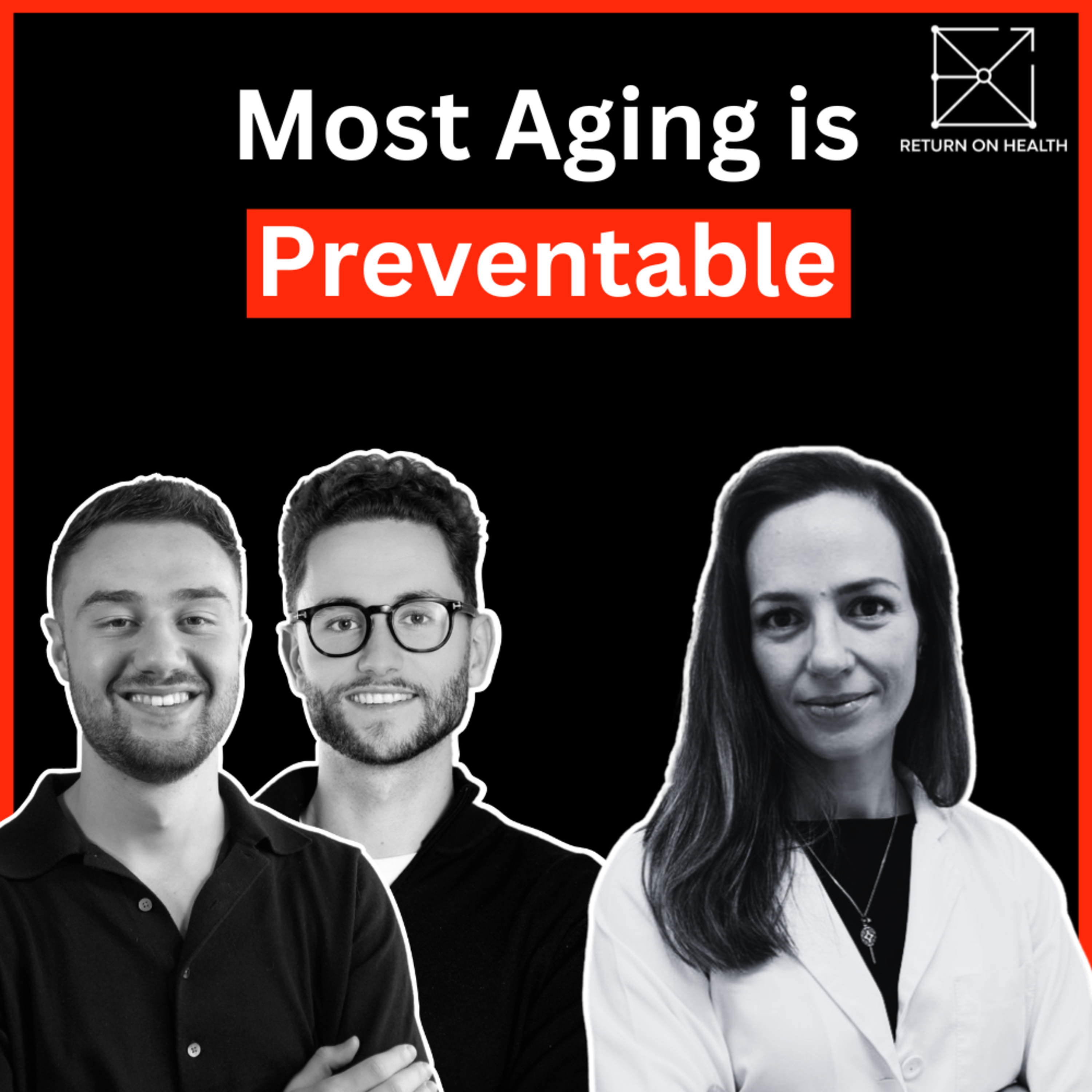
Geriatrician: Most Aging Is Preventable — We Just Start Too Late
Most age-related decline is not inevitable — it is the downstream consequence of choices, environments and missed interventions that compound for decades. Dr. Roberta Vella Azzopardi, a geriatrician and geroscientist with a PhD in cognitive frailty, zooms out from individual diseases to explain what independence actually depends on, where the biggest prevention opportunities are missed, and why two people at the same age can look completely different in clinic.
Frailty, not age, is the real signal
Frailty is best understood as the gradual loss of physiological reserve. Once reserves drop below a threshold, even small stressors — an infection, a fall, a hospital stay — can trigger long-term decline. That is why chronological age is a poor risk marker on its own. Two seventy-year-olds can have radically different trajectories depending on how much reserve they have built and protected.
Why medicine often intervenes too late
Modern medicine is organised around treating disease once it appears. That framing leaves the decade or two where trajectories are still flexible largely unattended. By the time a clinical diagnosis is made, much of the biology has already shifted. Real prevention means noticing and acting on the deviations that sit below diagnostic thresholds.
Muscle is the organ most people neglect
Muscle is not just about movement. It directly affects insulin sensitivity, metabolic regulation, and even brain function through the molecules it releases during contraction. Losing muscle accelerates metabolic and cognitive decline. The reverse is also true: even later in life, resistance training combined with sufficient protein can improve outcomes that were assumed to be fixed.
Peak span beats lifespan
Lifespan is the easy number to chase. Peak span — the years in which you remain functionally independent, cognitively sharp, and able to live the way you want — is the one that actually matters. Peak span is built, not inherited, and it is built earlier than most people realise.
Hearing loss as an underestimated dementia driver
Hearing loss is one of the most consistently modifiable risk factors for cognitive decline, yet it remains widely underdiagnosed and undertreated. It contributes through increased cognitive load, social isolation, and shared vascular mechanisms. Treating hearing loss early is one of the highest-leverage interventions available in midlife.
Menopause is medicine's biggest blind spot
Women's health in and around menopause is often treated as a cluster of isolated symptoms rather than as the downstream effect of a major hormonal transition. That fragmentation costs years of missed intervention opportunities. Taking the hormonal shift seriously — and treating the system, not only the symptoms — is essential.
Hype vs. evidence
The longevity space is noisy. What consistently holds up is the boring list: resistance training, protein, sleep, movement, social connection, and treating the few modifiable risks (hearing, vascular health, metabolic health) that move outcomes the most. More exotic interventions only make sense once those fundamentals are in place.
Key takeaways
Frailty reflects loss of physiological reserve — and it is a better risk signal than age. Muscle is a metabolic and cognitive organ, and resistance training plus protein still help late in life. Peak span matters more than lifespan. Hearing loss is a major, modifiable dementia risk. Menopause is treated as isolated symptoms rather than a systemic transition, leading to missed interventions. Prevention is a system, not one intervention.
Questions this episode answers
What is frailty, and why does it matter more than age?
Frailty is the gradual loss of physiological reserve. Once reserves drop below a threshold, even small stressors such as an infection, a fall or a hospital stay can trigger long-term decline. That is why chronological age is a poor risk marker on its own: two seventy-year-olds can have radically different trajectories.
Why does medicine intervene too late?
Because it is organised around treating disease once it appears, which leaves the decade or two where trajectories are still flexible largely unattended. By the time a diagnosis is made, much of the biology has already shifted.
Why does muscle matter beyond movement?
Muscle affects insulin sensitivity, metabolic regulation and even brain function through the molecules it releases during contraction. Losing it accelerates metabolic and cognitive decline, and the reverse holds too: resistance training with sufficient protein improves outcomes that were assumed to be fixed, even later in life.
What is peak span?
The years in which you remain functionally independent, cognitively sharp and able to live the way you want. Dr. Vella Azzopardi argues it matters more than lifespan, and that it is built rather than inherited, earlier than most people realise.
Is hearing loss really a dementia risk factor?
It is one of the most consistently modifiable risk factors for cognitive decline, contributing through increased cognitive load, social isolation and shared vascular mechanisms. It remains widely underdiagnosed, which makes treating it early one of the highest-leverage interventions in midlife.
Why is menopause called medicine's biggest blind spot?
Because women's health around menopause is often treated as a cluster of isolated symptoms rather than as the downstream effect of a major hormonal transition. That fragmentation costs years of missed intervention opportunities.
What actually works for preventing age-related decline?
The boring list holds up: resistance training, protein, sleep, movement, social connection, and treating the few modifiable risks such as hearing, vascular health and metabolic health. More exotic interventions only make sense once those fundamentals are in place.