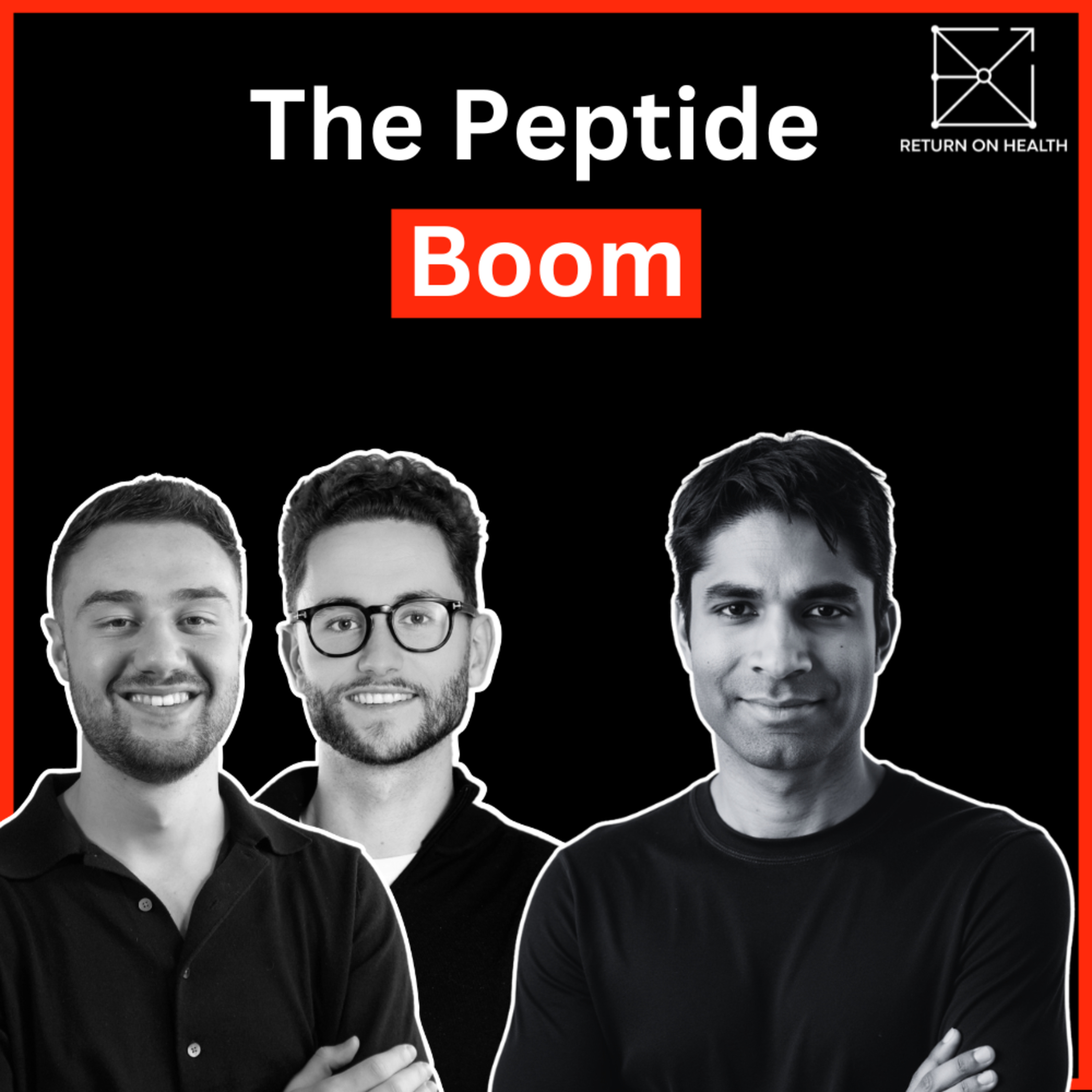
The Truth About Peptides and Longevity Medicine — Dr. Anand Vinjamoori
Longevity medicine has never had more attention or money — and yet many of its companies struggle to build durable businesses. Dr. Anand Vinjamoori, trained at Harvard in both medicine and business and a founding chief medical officer in the space, joins the show to explain that paradox, and to make the case for reading the peptide boom and the biomarker gold rush with far more nuance.
Chapters jump into the video
The longevity paradox
The field is booming, but building a sustainable longevity clinic is genuinely hard. Vinjamoori's diagnosis is that the constraint is rarely the science — it is demand, messaging and customer acquisition. Most people do not want longevity in the abstract; they want a specific problem solved, and companies that forget that tend to struggle.
What patients actually want
Having helped build Modern Age, Vinjamoori has watched customer preferences shift. The lesson is that abstract promises of more years convert poorly, while concrete, felt improvements convert well. The businesses that last are the ones that meet people where their motivation actually is rather than where the marketing deck assumes it should be.
Peptides as the next big wave
Vinjamoori expects peptides to be one of the next major waves in health optimisation. But he is clear-eyed that much current use runs ahead of both the evidence and the regulation — closer to medical experimentation than settled practice. Enthusiasm and caution have to coexist here; pretending the data is stronger than it is helps no one.
The evidence gap — and how to close it
His deeper argument is that the traditional evidence system is too slow for the pace of new therapies. Waiting years for classical trials means patients and clinicians act on anecdote in the meantime. Vinjamoori sees structured real-world data and patient registries as a realistic way to narrow that gap — imperfect, but far better than flying blind.
Biomarkers are signal, not scripture
On biomarkers, Vinjamoori argues for nuance over worship. A single number rarely tells the whole story — HbA1c, for instance, is easy to over-interpret. Multi-omics and biological individuality point toward a future of measurement that is richer but also demands more careful reading, not less. Treated as absolute truth, biomarkers mislead.
Better individual risk assessment
The through-line is personalisation: the same intervention carries different value for different people, so medicine needs sharper individual risk assessment rather than one-size protocols. Getting that right is what separates genuinely data-driven care from care that is merely data-decorated.
Fundamentals, hormesis and culture
Asked what actually works, Vinjamoori keeps exercise near the top as one of the strongest interventions available. He is more skeptical of overapplied hormesis — cold plunges pushed well past any clear benefit — and reflects on the cultural gap between American optimisation culture and a more relaxed European lifestyle rhythm, where the healthier defaults are sometimes the ones nobody is selling.
Key takeaways
Longevity medicine is booming, but the binding constraint is demand and messaging, not science. Patients want concrete problems solved, not abstract extra years. Peptides may be the next big wave, yet much use runs ahead of evidence and regulation. The classical evidence system is too slow — real-world data and registries can help close the gap. Biomarkers are signal, not scripture, and should be read with nuance. Exercise remains a top intervention while much hormesis is overapplied.
Questions this episode answers
Are peptides the next big wave in longevity medicine?
Vinjamoori expects them to be, but he is clear-eyed that much current use runs ahead of both the evidence and the regulation, closer to medical experimentation than to settled practice. Enthusiasm and caution have to coexist, and pretending the data is stronger than it is helps no one.
What is the longevity paradox?
The field is booming, yet building a sustainable longevity clinic is genuinely hard. Vinjamoori's diagnosis is that the binding constraint is rarely the science. It is demand, messaging and customer acquisition.
What do patients actually want from a longevity clinic?
A specific problem solved, not more years in the abstract. Having helped build Modern Age, Vinjamoori found that abstract promises convert poorly while concrete, felt improvements convert well.
How can the evidence gap around new therapies be closed?
He argues the traditional evidence system is too slow for the pace of new therapies, which leaves patients and clinicians acting on anecdote in the meantime. Structured real-world data and patient registries are his realistic answer: imperfect, but better than flying blind.
Can you trust a single biomarker like HbA1c?
Vinjamoori argues for nuance over worship. A single number rarely tells the whole story, and HbA1c in particular is easy to over-interpret. Multi-omics and biological individuality point toward measurement that is richer but demands more careful reading, not less.
What actually works, in his view?
Exercise stays near the top as one of the strongest interventions available. He is more skeptical of overapplied hormesis, including cold plunges pushed well past any clear benefit.
Why does he contrast American and European health culture?
Because the healthier defaults are sometimes the ones nobody is selling. He reflects on the gap between American optimisation culture and a more relaxed European lifestyle rhythm.